
Live Commerce ROI: The Real Cost vs. Return (and Why Credit-Based Pricing Wins)
Live commerce ROI is all about balancing stream costs with sales returns. Here’s how to calculate it, compare platforms, and make every live selling minute count.
Live commerce ROI is a hot topic in 2026, but platform costs can still eat into profits fast. If you’re trying to balance the cost of shoppable livestreaming with real sales returns, you’re not alone. The difference between a profitable campaign and wasted spend often comes down to how you pay for your platform—not just what you stream.
What Actually Drives Live Commerce ROI?
ROI is simple math: sales revenue minus costs, divided by costs. For live commerce, costs include your platform fees, transaction charges, technology, and any extras needed to keep your show running.
- Revenue: Total sales made during your live session, including impulse purchases and follow-ups.
- Costs: Technology platform fees, streaming credits, influencer payments, product samples, shipping, and paid promotion.
- ROI: (Revenue, Costs) ÷ Costs
Getting ROI right is tough because pricing structures and hidden fees vary widely between live shopping platforms.

Credit-Based vs. Subscription Pricing: Which Maximizes ROI?
Most live commerce software still uses monthly subscriptions. Whether you stream for 10 minutes or all day, you pay the same. That can work if your sales are steady, but it’s a problem if your volume changes seasonally or you’re just starting out.
Stremify uses credit-based, pay-as-you-go pricing. You buy a pack of credits and only spend them while you’re live. Planning a big launch? Stream more. Slower month? Stream less and keep your credits for next time.
The Real Cost Breakdown
Here’s a side-by-side look at how credit-based pricing compares to traditional monthly plans from other platforms:
| Platform | Pricing Model | Entry Cost | Cost Flexibility |
|---|---|---|---|
| Stremify | Credit-based (pay-as-you-go) | Starter: €15 for 50 credits1 | High (buy credits as needed) |
| Bambuser | Subscription | Typically from several hundred euros per month | Low (fixed monthly payments) |
| CommentSold | Subscription | Starts around $49/month | Low (fixed monthly payments) |
| StreamYard | Subscription | Starts around $25/month | Low (fixed monthly payments) |
With Stremify, you’re not paying for streaming hours you never use. Your ROI calculation isn’t dragged down by unused subscription time, and you can test, scale, or pause your campaigns without penalty.
Hidden Fees That Destroy Live Commerce ROI
Some platforms charge extra for features you expect, like multistreaming to TikTok, Instagram, or Facebook, or even comment-to-buy checkout. Others add transaction fees to every purchase.
- Watch for per-streaming-hour surcharges, integration fees, transaction percentages (some take up to 5 percent per sale), and extra costs for analytics or support.
- Make a spreadsheet with every fee, not just the headline price, before you commit.
Credit-based pricing keeps these costs transparent. You know exactly what each live minute costs, and nothing gets added after the fact.
How to Maximize Your Live Commerce ROI in Practice
Crunching numbers is only the start. Here’s how top sellers keep ROI strong in 2026:
1. Test Early, Test Often
Run short campaigns before committing to long events. With a credit-based setup, you can experiment without burning through a monthly subscription.
2. Multistream for Free Reach
Platforms like Stremify let you go live on TikTok, Instagram, Facebook, YouTube, and Twitch at once, with no extra fees per channel. More viewers, same cost per streaming minute. In our experience running live shopping campaigns, multistreaming helps sellers reach customers where they already spend time and boosts overall engagement.
3. Automate Checkout and Ordering
Comment-to-buy tools reduce cart abandonment and capture impulse buys. Don’t make viewers leave the stream to shop.
4. Use Real-Time Engagement Tools
Interactive quizzes keep viewers watching and encourage more buying, raising your revenue per minute streamed.
5. Measure and Adjust Fast
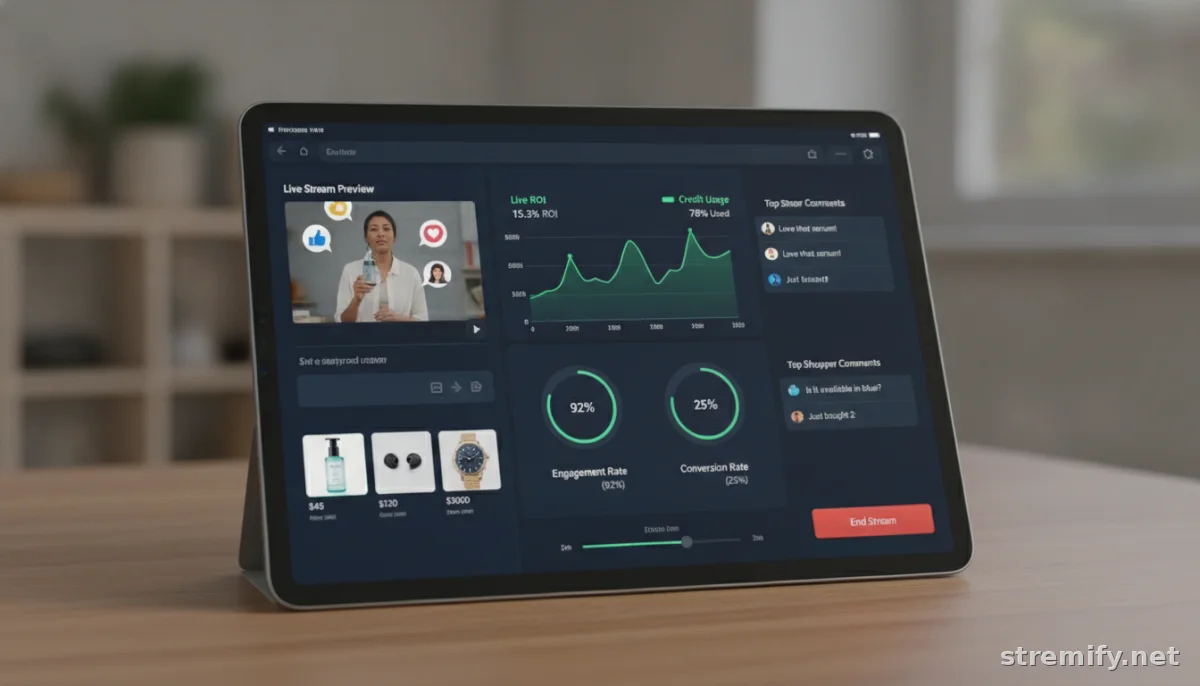
Look for detailed dashboards. See what content, time slots, and hosts drive results. Adjust your streams and ad spend in real time. The faster you optimize, the higher your ROI.
Choosing a Live Commerce Platform: Checklist for ROI
- Does the platform offer credit-based pay-as-you-go pricing?
- Is multistreaming included or extra?
- Are there hidden transaction or integration fees?
- Can you access real-time data and engagement tools?
- How fast can you test, tweak, and scale?
If you want to grow sales without letting fees eat your margins, credit-based live platforms make sense. Stremify’s pay-as-you-go model means you only spend when you’re actually streaming, and you get all the features for the same credit cost—not a higher tier.
Takeaway: Treat your live commerce ROI with care. Map every cost, compare real flexibility—not just sticker prices—and test on a platform that lets you scale up or down without penalty. If you want your minutes to count, not just your money, try Stremify’s free demo and see how credit-based pricing can improve your bottom line.
Frequently asked questions
How do you calculate live commerce ROI?
To calculate live commerce ROI, subtract your total costs (platform fees, promotions, payments) from your sales revenue, then divide that by your costs. The formula is (Revenue - Costs) ÷ Costs. Track all fees, not just the biggest ones.
Why does credit-based pricing improve live commerce ROI?
Credit-based pricing lets you pay only for the live streaming minutes you use, rather than a fixed monthly fee. This means you avoid paying for unused time and can scale your spending up or down to match your actual live sales activity, maximizing ROI.
What hidden fees affect live commerce ROI?
Hidden fees include transaction charges per sale, extra costs for multistreaming, integration fees for connecting your store, and charges for advanced analytics. Always review the detailed pricing page and ask about all potential add-ons before you start.
Which platforms offer the best live commerce ROI?
Platforms with transparent, pay-as-you-go models, like Stremify, typically offer the best live commerce ROI. Look for included features without hidden fees and the ability to multistream without extra cost. Always compare each platform’s true cost over a month of use.
How much should you spend on live commerce to see positive ROI?
There’s no one-size-fits-all number, but most sellers should spend only what they can directly tie to sales returns. Start small with pay-as-you-go credits, scale up campaigns that work, and watch your costs closely to ensure each stream is profitable.